
How to Build a Realistic Indian Mini Kirana for Your Dollhouse

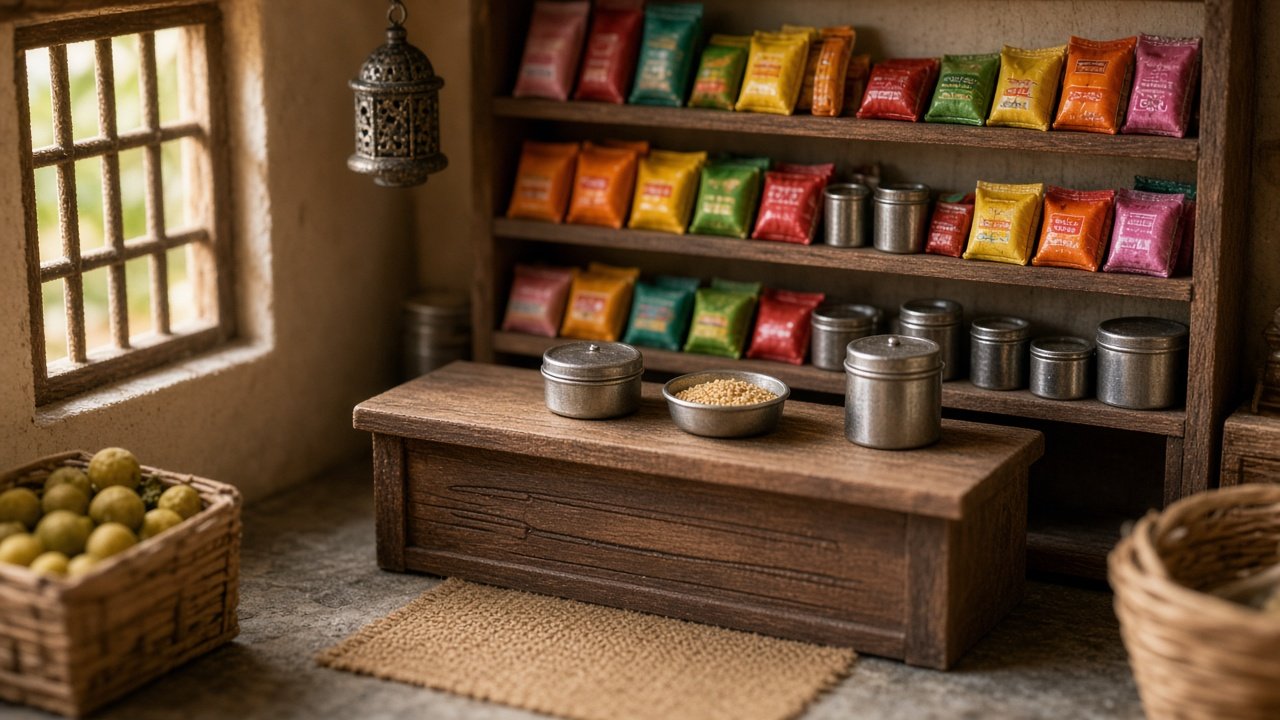
A tiny kirana store is one of those dollhouse scenes that makes people lean in and smile. The stacked packets, the weighing scale, the steel dabbas, the handwritten price board—everything feels familiar. If you love Indian dollhouse kitchen miniatures, building a mini kirana is a joyful project that mixes storytelling with careful detail.
This guide walks you through planning the space, choosing pieces in matching scale, styling shelves like a real neighbourhood shop, and finishing with soft lighting and little “lived-in” touches. You do not need a huge collection to start. A few well-chosen shelves and packets already tell a warm Indian story.
Why a mini kirana works so well
Kirana shops are packed with colour and pattern. Printed wrappers, oil cans, biscuit packs, and spice jars create visual interest even in a small corner. For dollhouses set in India—or for collectors who want Indian flavour in a modern or vintage room box—the kirana becomes the heart of the scene.
It also pairs beautifully with a dollhouse kitchen. Imagine a corridor between kitchen and store, or a corner shop opening onto a courtyard. That everyday rhythm feels authentic without needing elaborate furniture.
Step 1: Decide your story and footprint
Before you buy or build, sketch a tiny floor plan. Ask yourself:
- Is this a standalone shop front, a corner of a larger house, or a room-box display?
- Will shoppers “enter” from the street, or is it an open-front shelf scene for photography?
- Do you want a busy neighbourhood store or a quiet village ration shop?
A narrow footprint works well: one counter, two or three shelf bays, and a small cash corner. Leave a little aisle so figures can stand and browse. If your dollhouse already has a kitchen, place the kirana beside it so Indian dollhouse kitchen miniatures and store props can share a visual language—steel vessels, enamel signs, woven baskets.
Step 2: Get the scale right
Most dollhouse scenes look convincing when pieces sit in the same scale family. The common collector scale is 1:12 (one inch equals one foot). Packets, jars, and shelves should feel proportional to each other and to any dolls you use.
If a biscuit pack looks huge next to a tea tin, the eye notices. Start with a scale guide and stick to it while you shop. When pieces match, even a simple layout feels finished.
Step 3: Build the “bones”—shelves, counter, and flooring
Shelves and counter
Open wooden shelves or wire racks read instantly as shop furniture. Vary heights: lower shelves for heavy tins and oil, eye-level for biscuits and snacks, top shelves for lighter packets. A simple counter with a glass jar of toffees (or a tiny tray of loose items) gives the shopkeeper a place to stand.
Floor and walls
A tiled floor pattern, worn linoleum look, or plain painted base all work. Walls can stay soft cream or pale green. Add a small calendar, a festival poster, or a faded brand board for local character—keep text tiny and readable only up close.
Storage under the counter
Cardboard cartons, cloth bags, and stacked crates suggest stock waiting to go up. These fill empty space and make the shop feel busy without cluttering the customer area.
Step 4: Stock the shelves with Indian brand flavour
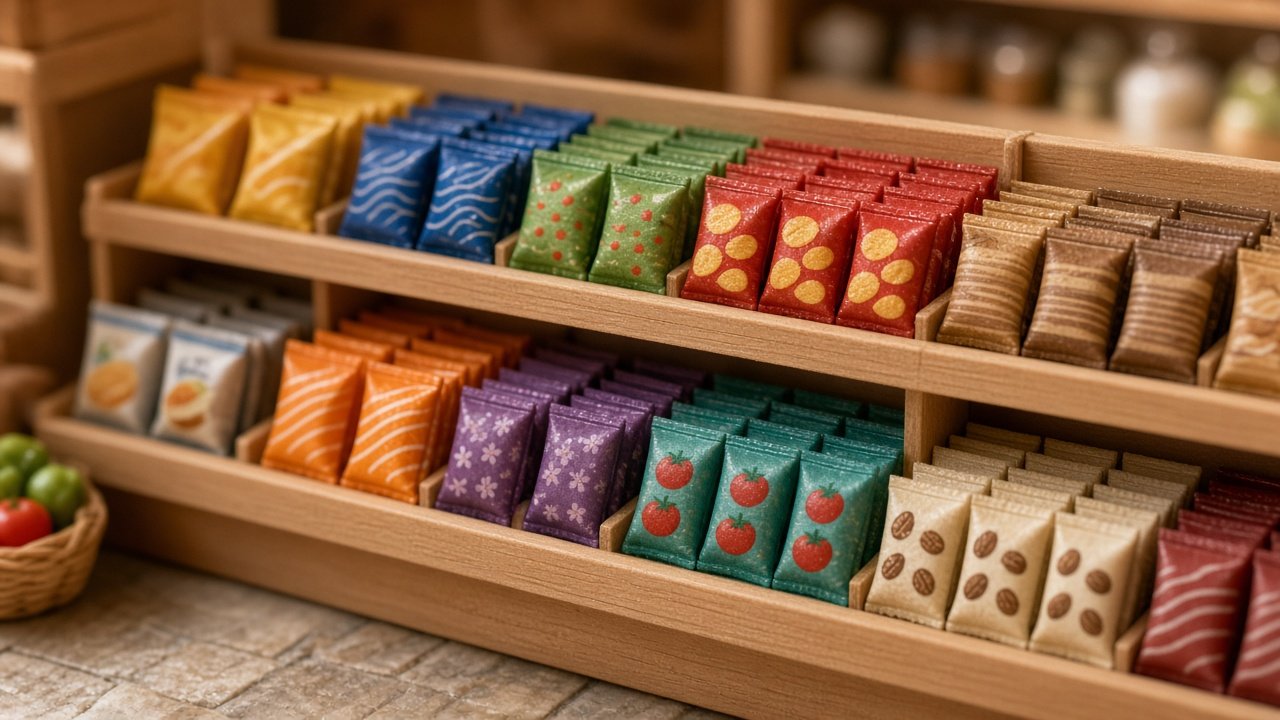
This is where the scene comes alive. Look for miniature food packets, snack wrappers, spice boxes, and grocery-style replicas that echo everyday Indian brands and pantry staples. Mix:
- Snack and biscuit packets in bright colours
- Tea, coffee, and milk-powder style packs
- Oil, atta, and rice-style bags or boxes
- Soft-drink or juice cartons for a cooler corner
- Spices in small jars or sealed pouches
Browse the Indian Edit for pieces that lean into desi dollhouse life, and the Brand Miniatures collection when you want recognisable packet energy on the shelves.
Tip: group by category the way real shops do—biscuits together, soaps and detergents on one bay, edible oils in a sturdy row. That quiet organisation sells the realism more than random piles.
Step 5: Add kitchen-adjacent props
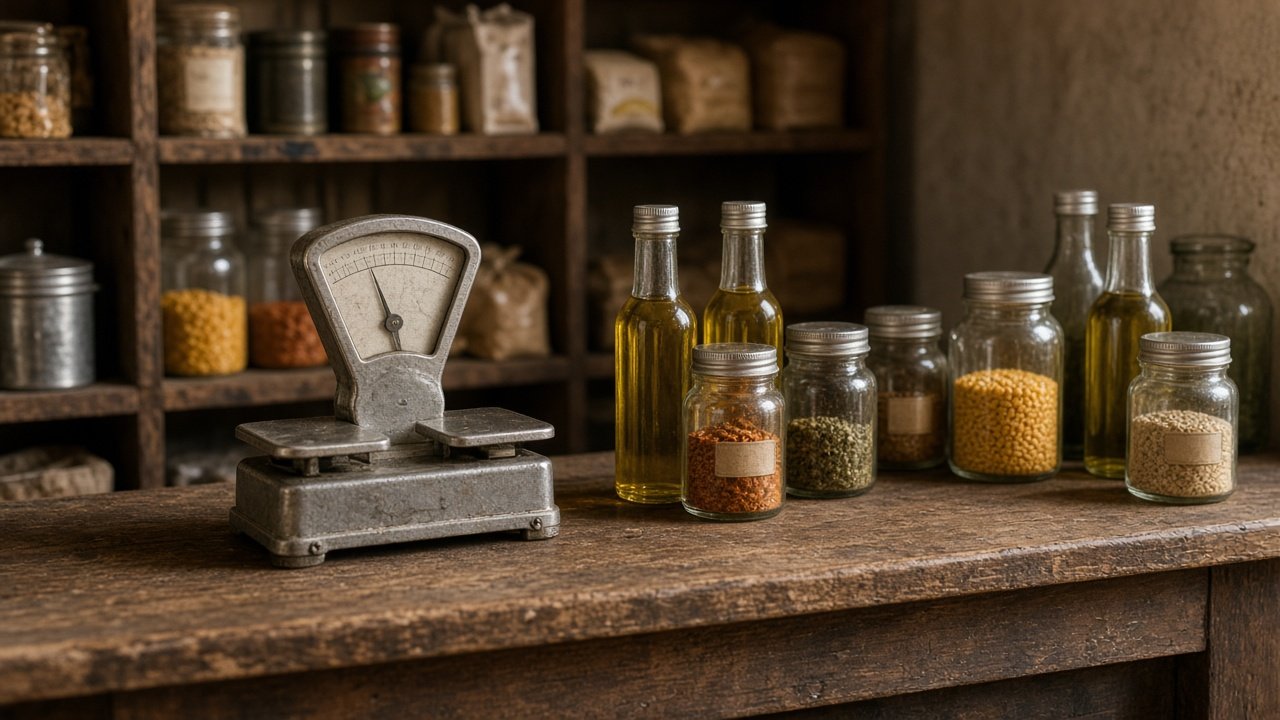
Many collectors blur the line between shop and home kitchen. A weighing scale, measuring scoops, steel dabbas, and a mortar-and-pestle on a back shelf connect the kirana to cooking. If your wider dollhouse includes a kitchen, echo the same materials: brass, stainless steel, enamel, wood.
A hanging onion-garlic basket, a broom in the corner, and a plastic stool for the shopkeeper are small details that photograph beautifully.
Step 6: Signage, pricing, and soft storytelling
Hand-lettered (or printed tiny) price tags, a “credit account” notebook, and a chalk board with the day’s specials add narrative. You do not need perfect calligraphy—slightly imperfect writing feels more real.
Festival seasons are an easy theme: Diwali sweets trays, Holi colour packets, or school-reopening stationery on a side shelf. Rotate a few seasonal accents so the scene stays fresh for photos and social shares.
Step 7: Lighting and photography tips
Warm LED fairy lights or a small battery lamp behind the counter cast a cosy evening glow. Avoid harsh white light that flattens colour. Shoot from slightly above aisle height so shelf rows read clearly. A shallow depth of field (phone portrait mode works in a pinch) makes packets pop.
Keep backgrounds simple. A plain wall or soft fabric behind the room box keeps the focus on your Indian dollhouse kitchen miniatures and stocked shelves.
Common mistakes to gently avoid
- Mixing wildly different scales on the same shelf
- Overfilling every centimetre until the aisle disappears
- Using only one colour family—real shops are cheerfully mismatched
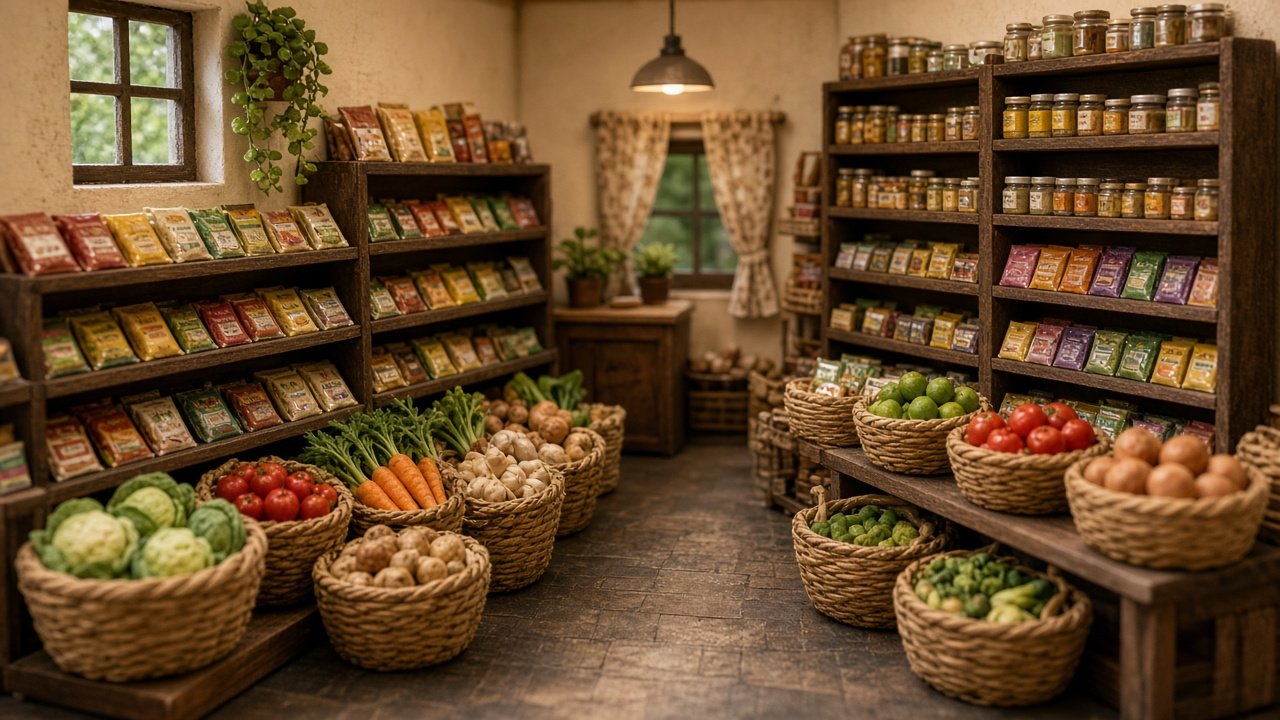
- Forgetting empty space: a little breathing room makes the scene readable
Less can still feel abundant if colour and category grouping are strong.
A simple starter shopping list
If you are building your first mini kirana, try this modest set:
- One counter and two shelf units
- A handful of brand-style packets and tins
- One scale or cash-tray prop
- Two or three kitchen vessels for the back area
- One floor covering and one wall accent
Grow from there as you find pieces you love. Collecting is part of the fun.
Soft next step
When you are ready to stock your shelves, explore the Indian Edit and Brand Miniatures at Miniature Artz, or browse the full shop. Questions about scale, shipping across India, or studio hours? See our FAQs or Contact page—we are based in Coimbatore and happy to help you plan your scene at a gentle pace.