
How to Style a Dollhouse Kitchen with Miniature Fruits and Vegetables

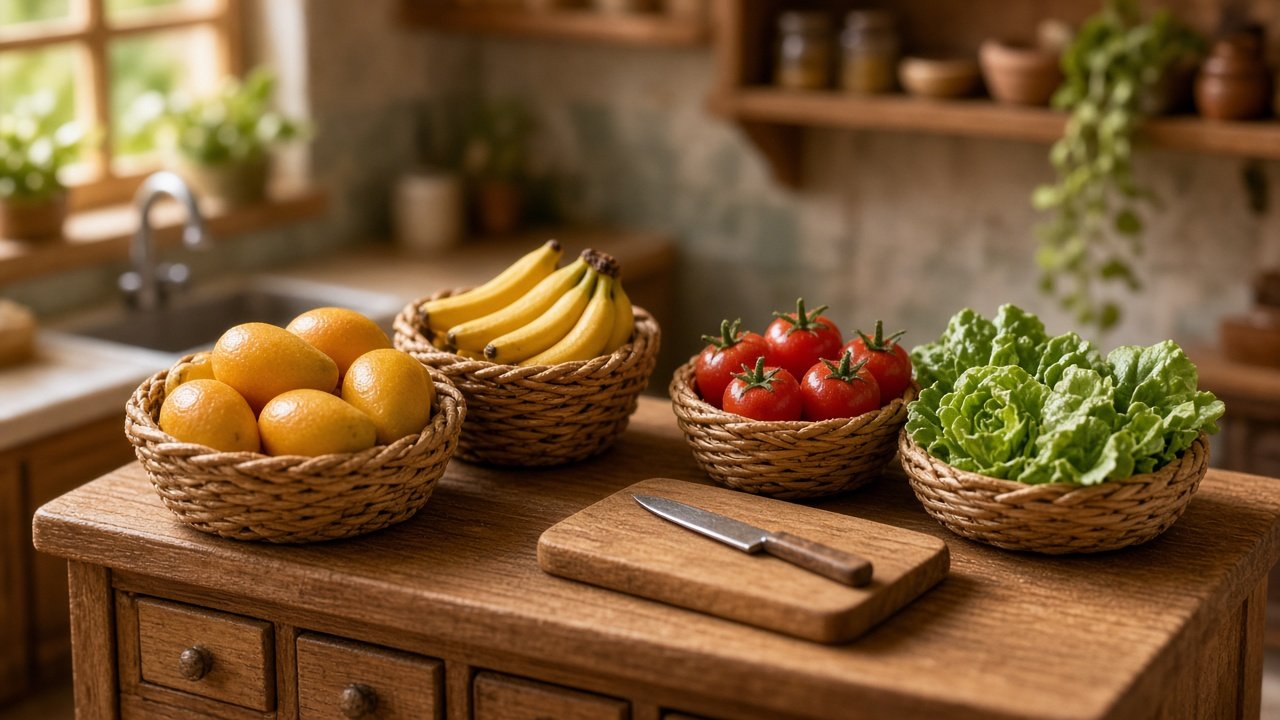
A dollhouse kitchen feels alive when something is “cooking” or waiting on the counter. Miniature mangoes, onions, tomatoes, leafy greens, and citrus add colour, seasonality, and that lived-in Indian kitchen mood. If you collect miniature fruits vegetables dollhouse pieces, this guide shows how to group them, place them at the right height, and keep the scene tidy and photogenic.
No need for a full market stall on day one. A single cutting board with onion and chilli, or a fruit bowl on the dining ledge, already tells a warm story.
Why produce sells the realism
Painted resin and polymer fruits catch light the way real skins do – soft sheen on tomato, matte dust on potato, bright orange on citrus. Eyes read food instinctively. Even visitors who do not collect miniatures recognise a banana bunch or a pile of green chillies and lean closer.
Produce also bridges kitchen and kirana. Leftover “stock” in a basket near the door echoes a neighbourhood shop. Pair ideas with our Indian mini kirana and brand food packets posts when you want pantry plus fresh produce in one home.
Start with scale and surfaces
Most dollhouse kitchens look convincing at 1:12. Fruits should feel right next to plates, knives, and taps. If a watermelon dwarfs the sink, the illusion slips. When in doubt, check the dollhouse scale guide before you fill every bowl.
Useful surfaces for produce:
- Wooden cutting boards and thalis
- Wire or cane-look baskets
- Steel dabbas (open lids show stored veg)
- Windowsill ledges and fridge tops
- Mesh bags hanging near the door
Browse Realistic Miniature Food and the Indian Edit for food and kitchen-adjacent pieces that play well together.
Build zones in the kitchen
Prep zone
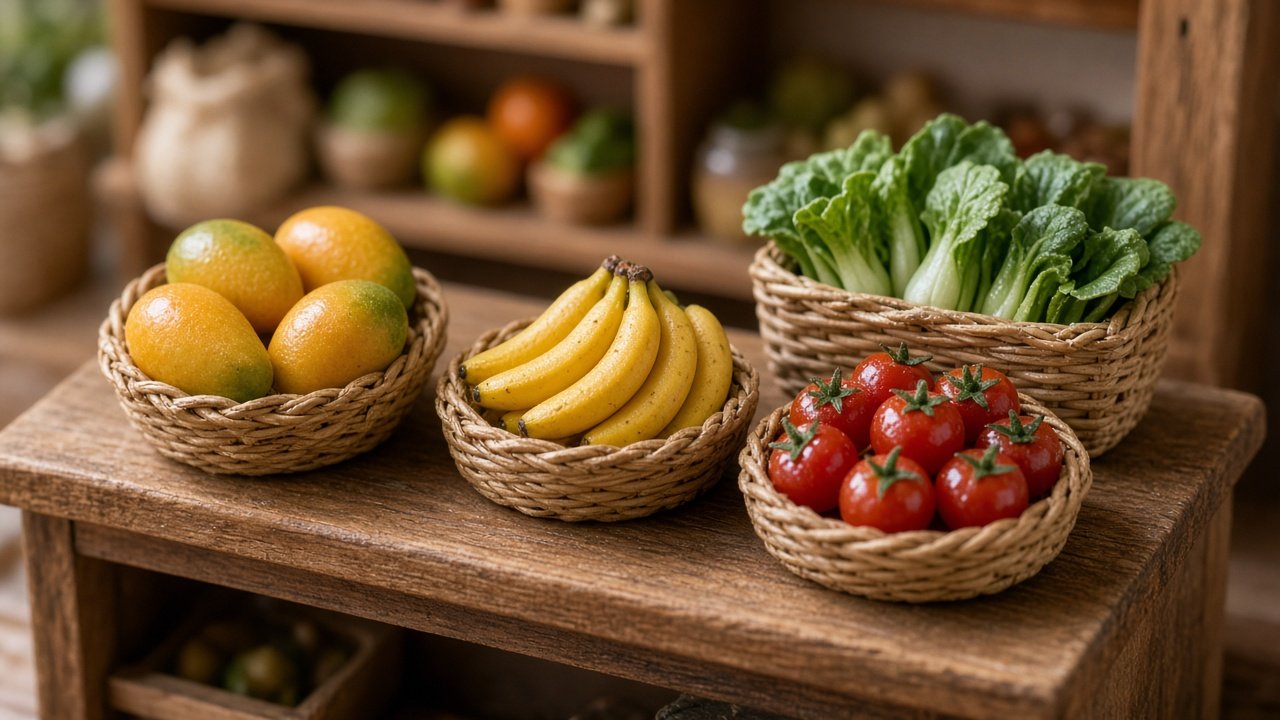
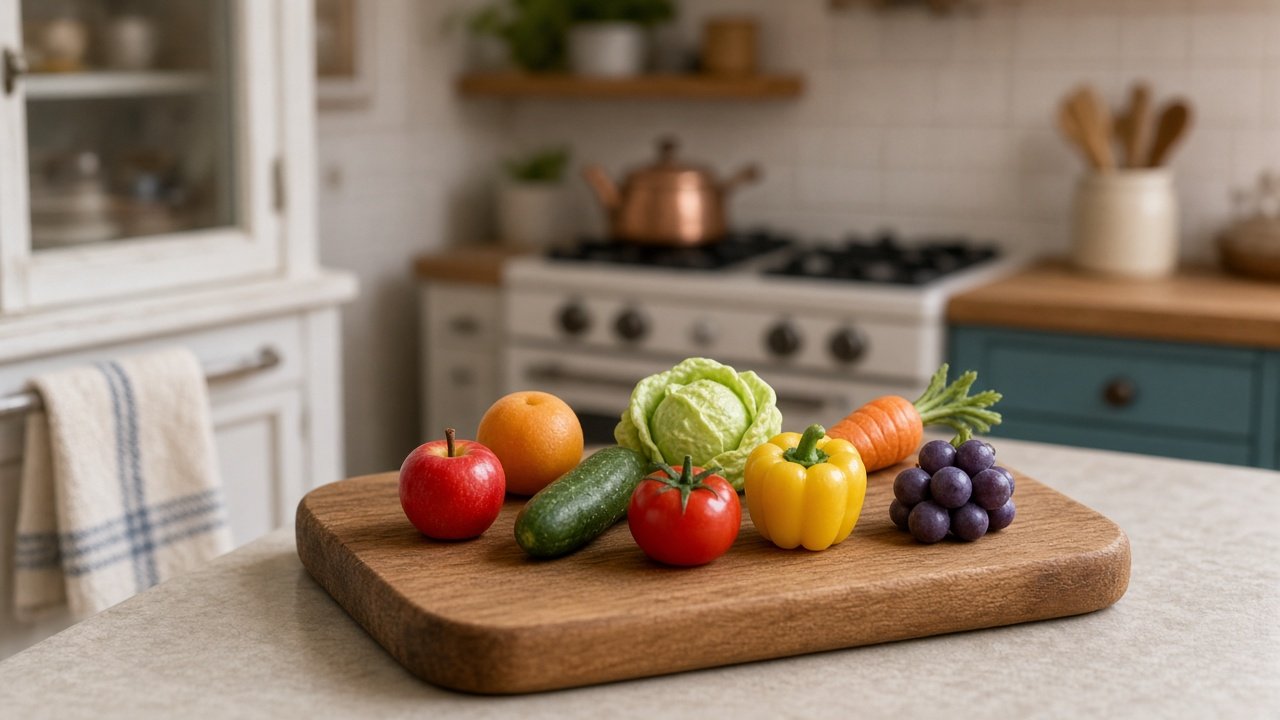
Keep onion, garlic, ginger, green chilli, and tomato near the chopping board. A tiny knife and a scrap of “peel” (even a painted crumb of clay) suggest mid-task cooking. Do not overcrowd – leave chopping space.
Storage zone
Potatoes and onions live in low baskets or under-counter crates. Leafy greens can rest in a colander by the sink. Dried red chillies in a jar add vertical interest.
Serving and fruit zone
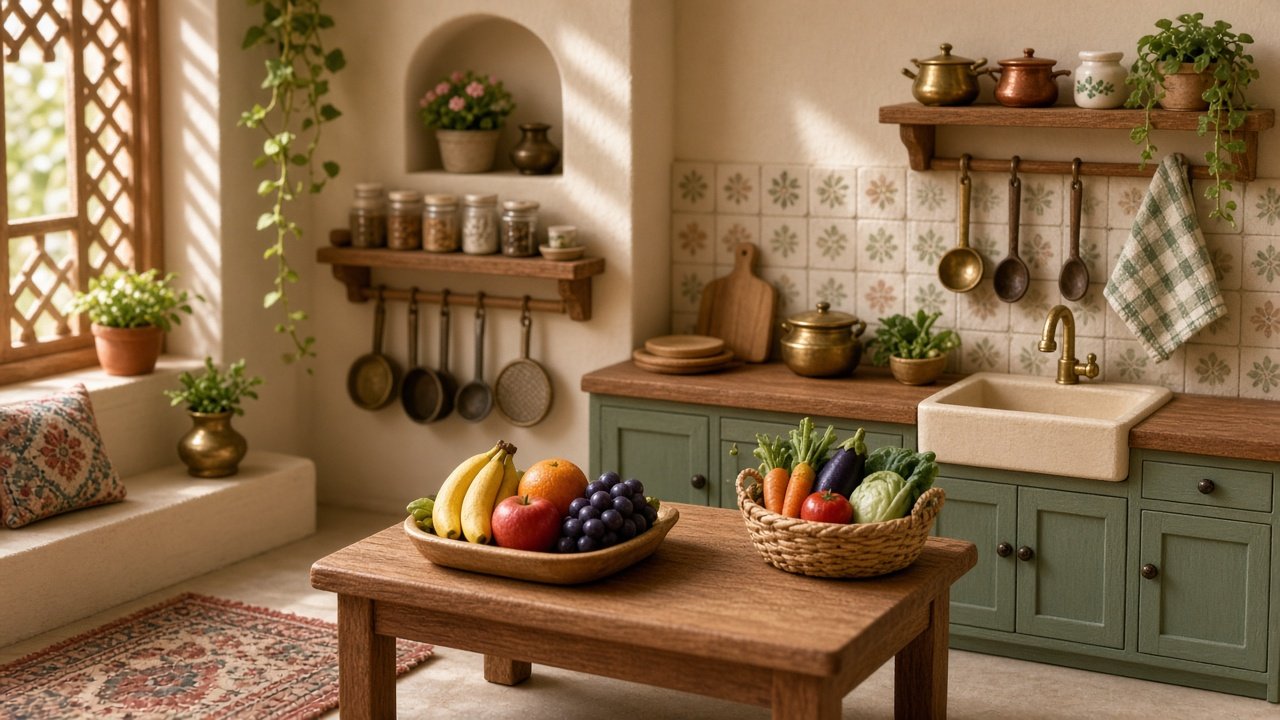
A bowl of mixed fruit on the dining pass-through or centre table softens the hard lines of cabinets. Seasonal swaps keep photos fresh: citrus in cooler months, mango accents for summer storytelling, pomegranate for festive weeks.
Market-bag zone
A shopping bag or jute tote with a few veg spilling out near the doorway implies someone just came home. Lovely for storytelling photos.
Colour and composition tips
- Repeat one colour three times (e.g. tomato red on board, in basket, and as a whole fruit on the sill).
- Mix shapes: round (lime), long (chilli or okra-style pieces), clustered (grapes or leafy bunches).
- Use odd numbers in small piles – three onions often look better than four.
- Leave negative space so the eye can rest.
Avoid rainbow chaos. Real Indian kitchens have colour, but usually in pockets, not every surface shouting at once.
Indian kitchen flavour without clutter
Think of what you actually see at home: steel vessels, a masala dabba nearby, a hanging basket, and a plate of cut fruit for guests. Miniature fruits and vegetables sit happily beside brand packets and spice jars. The Brand Miniatures collection helps fill cupboard fronts while produce owns the counters.
For furniture bones – counters, chairs, fridge shells – peek at Modern Dollhouse Furniture so your food has a stable stage.
Lighting and photography
Warm light flatters oranges, mangoes, and tomatoes. Cool white LEDs can make greens pop but may wash out warm fruits – try both and keep what you like. Shoot slightly above counter height so board arrangements read clearly. A plain wall behind the kitchen keeps focus on the produce.
Dust fruits lightly with a soft brush before photos; tiny fluff shows up harshly on glossy skins.
Care notes for food miniatures
Most resin and polymer produce dislike long direct sun (colours can fade) and harsh cleaners. Wipe with a dry or barely damp soft cloth. Keep oily craft paints and food oils away from finished surfaces. Store spare pieces in a divided box so stems and delicate leaves do not snap.
Gentle handling and shade go a long way in humid coastal homes and dusty inland flats alike.
Weekend styling project
- Clear one counter and wipe the baseboard.
- Place one board + knife + three veg.
- Add one fruit bowl on the table.
- Add one basket of “storage” veg low down.
- Step back; remove anything that fights the story.
Optional: add one brand packet on a shelf for pantry contrast.
Common hiccups (and calm fixes)
- Everything looks piled – remove two items; keep the board half-empty.
- Fruit looks toy-bright – nest it beside matte vessels and wood so colours settle.
- Scale clash – move oversized pieces to a market basket in a room box instead of the sink edge.
- Dusty sheen – soft brush before every photo session.
Soft next step
When you are ready to gather miniature fruits vegetables dollhouse pieces, explore Realistic Miniature Food and Indian Edit at Miniature Artz, or browse the full Shop. Questions on scale or shipping? See FAQs or Contact – build the kitchen slowly, one thali at a time.